Museum Guide

Select from Pulldown
Museum Guide News
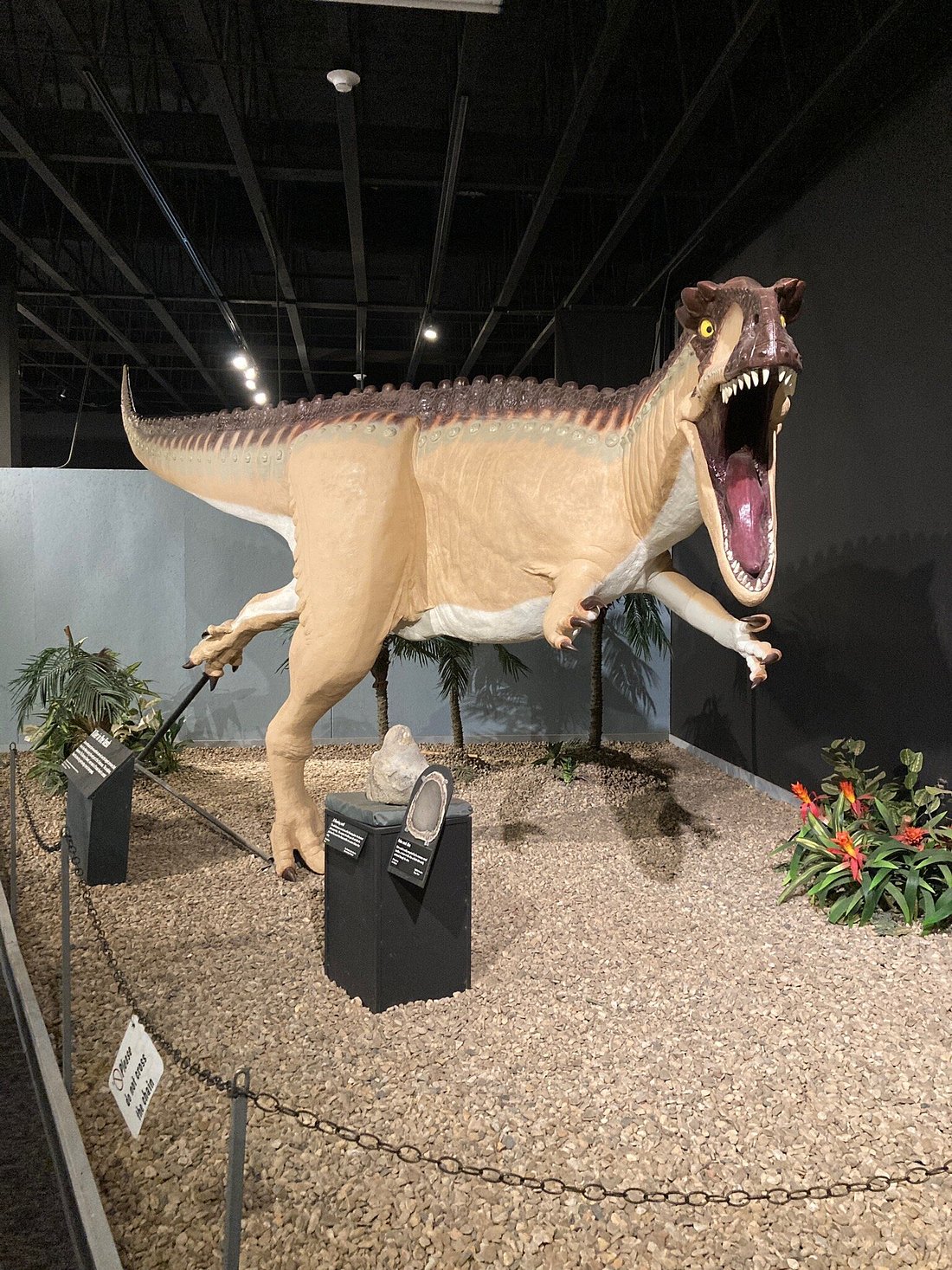
Mesalands Community College’s Dinosaur Museum and Natural Sciences Laboratory opened to the public in May of 2000.
The Museum receives approximately 5,000 visitors each year and our guests represent all 50 states and over 40 foreign countries. Guests to the Museum return year after year to see the changes, improvements, and new exhibits that our staff is continually planning and completing.
The Exhibit Hall at the Mesalands Community College’s Dinosaur Museum houses a host of replicated and original fossils from tiny footprint casts to the 40′ long skeleton Torvosaurus, a rare carnivore relative of Tyrannosaurus rex which hails from the Jurassic period.
The Museum’s focus is on the Mesozoic period, which is also known as ‘The Age of Dinosaurs.’ The Mesozoic is comprised of the Triassic, Jurassic and Cretaceous periods. The museum cultivates specimens from exclusive local dig sites. Guests are able to view Paleontology students and the curator preserve specimens through a viewing window located in the exhibit hall. Witness history as it’s uncovered and assembled in the laboratory.
The museum also boasts an impressive collection of minerals from all over the world. These are displayed in the exhibit hall and sold in the gift shop.
We welcome you to learn more about our Dinosaur Museum and Mesalands Community College, by clicking our website! https://www.mesalands.edu/community/dinosaur-museum/
Mesalands Community College’s Dinosaur Museum222 East Laughlin Street - Tucumcari, NM - (575) 461-6627


The Holocaust Museum & Cohen Educational Center in Naples, FL is teaching the lessons of the Holocaust to inspire action against hatred and to promote mutual respect.
The Museums Vision is to live in a world that values mutual respect, free of antisemitism and hatred. The Museums does this through, displaying artifacts and photographs which tell the individual stories within the larger history of the Holocaust, provide educational programs and activities to students at all grade levels and presenting the general public programs and exhibits that highlight elements of our collection and stories related to the Holocaust and other genocides;
The unique origin of the Museum was a Naples, Florida middle school classroom exhibit created by students and teachers studying the Holocaust called “Out of the Ashes.” The motto of the project was “Tell your children to tell their children and their children another generation. We will never forget!” The students knew the important lessons of the Holocaust must always be shared.
In 2001, the exhibit was transformed into a museum and educational center, operating as a 501(c)(3) not-for-profit corporation. With the focus on education, our programs reach over 15,000 students each year and the Museum hosts more than 5,000 visitors annually. The Golden Gate teachers and students would be so proud of the impact “Out of the Ashes” has had!
Today, the Museum houses over 1,000 original photographs and artifacts related to the Holocaust and World War II. These items are displayed chronologically, from the rise of Nazism to the Allied Liberation and Nuremberg Trials. Many of the artifacts have been donated or permanently loaned to the Museum by local Survivors, Liberators and other dedicated people. Of special interest are the photographs, documents and artifacts that belonged to the families of Survivors and Liberators who now live in Southwest Florida, many of whom are volunteers at the Museum.
The Museum is open Tuesday through Sunday from 1:00 pm to 4:30 pm, with last guest entry at 3:30 pm. The Museum is closed on Mondays and the following major U.S. holidays: New Year’s Day, Memorial Day, Independence Day, Labor Day, Rosh Hashanah, Yom Kippur, Thanksgiving Day, Day after Thanksgiving, Christmas Eve Day, and Christmas. Come Visit us at 975 Imperial Golf Course Blvd., Suite 108, Naples, FL and Check us out online: https://hmcec.org/ 239-263-9200. We look forward to welcoming you!
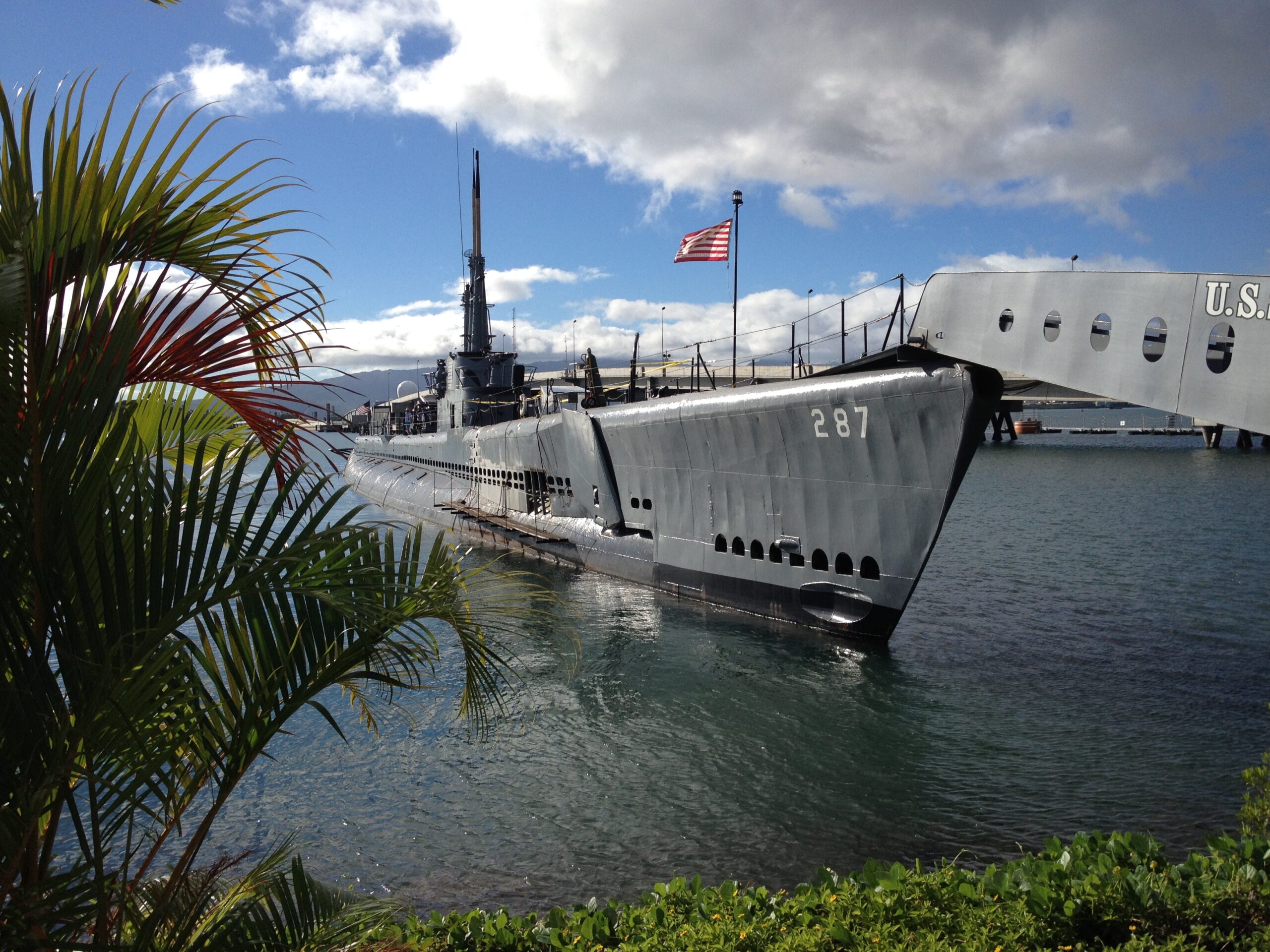
The Pacific Fleet Submarine Memorial Association (PFSMA) was created in 1978 to establish a memorial to the gallant sailors of the Silent Service, and to maintain as a centerpiece of this memorial the Fleet Submarine USS BOWFIN.
In 1979, the PFSMA saved the decorated Balao-class USS Bowfin (SS-287) from scrapping and began the painstaking process of restoring her to her 1945 configuration. The site in Honolulu, HI would become the USS Bowfin Submarine Museum & Park. Bowfin opened to the public in 1981, and an empty dirt lot soon expanded to include numerous outdoor exhibits. In 1986, construction began on a museum facility. In 2021, following extensive renovations, our campus was renamed the Pacific Fleet Submarine Museum.
USS Bowfin (SS-287) is a WWII Fleet Submarine and legend of the Silent Service. She served with distinction on nine successful war patrols between 1943 and 1945, destroying enemy ships in the Pacific, providing assistance to guerillas in the Philippines, and even venturing into the mine-laden Sea of Japan. Launched 7 December 1942, exactly one year after the Pearl Harbor attack, she was appropriately nicknamed “The Pearl Harbor Avenger.”
The museum now offers hands-on, interactive experiences that tell the story of the Silent Service from WWII to the Cold War to present day. In December 2021, USS Bowfin welcomed her 10 millionth visitor. Reopened in 2021 following a $20 million renovation, the Pacific Fleet Submarine Museum tells the story of the U.S. Submarine Force from World War II to the present. Models, weapon systems, photography, battle flags, recruiting posters, and a dissected Poseidon missile. Climb aboard to see how confining and demanding the life of the undersea warrior was. Walk through the forward and aft torpedo rooms, the galley, the wardroom, and the control room – restored to her 1945 configuration.
We are Open Daily from 7 am to 5 pm - Last admission is at 4:30 pm. Closed on New Year’s Day, Thanksgiving, and Christmas! Walk Up Adult General: $25.99 - Walk Up Children (4-12 years): $14.99 - Adult (Military and Kamaʻāina): $18.99 - Child (Military and Kamaʻāina): $9.99
Reservations for General Admission are not required. Prices are subject to change. Military Personnel in uniform are admitted free. We look forward to welcoming you upon you arrival! https://www.bowfin.org/