Museum Guide News
Museum Guide News

The American GI Museum is located in College Station, Texas and is a tribute to the men and women who have served in the United States Armed Forces. It's a place where visitors can learn about the history of American military involvement, from World War I all the way to the present day. The museum features exhibits that showcase uniforms, equipment, vehicles, and personal artifacts from various conflicts, providing insight into the experiences of soldiers throughout history!
The Museum highlights a unique collection of military vehicles from various periods and its collection is fully functional. Each vehicle has been meticulously restored to its original condition so that it both looks and runs just like it did when it first came off the assembly line. The museum’s insistence on maintaining such a well restored collection comes from its mission of educating future generations. At the museum’s annual “Living History Weekend” the public is invited to come experience the rumble of tanks, the whine of engines, the shots of small arms fire, and the blasts of tank and artillery cannons with impressive pyrotechnics simulating authentic firing. We also have an amazing collection of original World War II posters. We are very proud to be able to preserve these pieces of our nation’s past! Each poster tells a different story and holds a significant message.
It's a great destination for both history enthusiasts, families and those with a connection to the military. Located in College Station, Texas the museum is part of a vibrant cultural, academic and recreational setting in the city. Come visit us, as well as enjoy all that College Station, TX has to offer!
Hours: Wednesday – Saturday: 10AM – 5PM and Sunday: 12PM – 5PM"Group tours by appointment: Wednesday - Friday"
Located: 19124 Highway 6 South College Station, Texas - 979-690-0501 https://americangimuseum.org/


The Grissom Air Museum rich in history is located, near Peru, Indiana. The museum was founded in 1981, by seven prior service military personnel who lived in the area.
The Heritage Museum Foundation (HMF) wanted to preserve aircraft that were currently located at Grissom Air Reserve Base, formerly Grissom Air Force Base. The HMF started the Grissom Air Museum in 1982 outside of what then was the main gate of Grissom Air Reserve Base. Prior to May 12, 1968, the base was known as Bunker Hill Air Force Base before it was renamed Grissom AFB in honor of Virgil I. “Gus” Grissom, Indiana native and the second American astronaut into space. He perished in the Apollo I fire on Jan. 27, 1967.
Former home of the 305th Bomb Wing (BW) and the 319th Fighter Interceptor Squadron (FIS) and is now proud to be the home of the 434th Air Refueling Wing. The Grissom Air Museum currently offers 29 aircraft and 4 trainers.
While you are at the museum, sit in an F-4 Phantom, H1-Huey Helicopter, and look at a complete Link Trainer used in WWII, the Gen. William Kepner & Gus Grissom Exhibit, and more. Check out the history of the military base that started in 1954 as the Bunker Hill Air Force Base. Then head outside to 28 military aircraft that served from WW II through Today! Visit the museum when we have our Warbird Cruise-In Car Show or any other one of our events. You are encouraged to take photos of your experiences.
The museum is handicap accessible. RV and bus parking are available on the museum premises. Special admission pricing is available for groups of 15 or more guests. Contact us today to learn more about all the exciting possibilities at Grissom Air Museum. (765) 689-8011 and visit us at: https://www.grissomairmuseum.com/home/welcome

The Veterans’ Museum in Halls, TN continues to improve exhibits to enhance the visitors’ comprehension of the importance of Dyersburg Army Air Base (DAAB) during WWII.
A diorama, sponsored by Warren Nunn of Halls, vividly depicts the base proper with buildings, layouts, and the three runway locations. This diorama helps locate where it was located in relation to the highways as they are today. In 1942, the four-lane Highway 51 did not exist.
A monument dedicated to the 115 crewmen who were killed in air crashes while stationed at DAAB is now located in the Memorial Garden at the Museum site. The monument was sponsored by Sterling Forsythe, formerly of Ripley.
We will honor all of our fallen veterans at our Memorial Day Ceremony on Thursday, May 22, at 2:00 p.m. By laying a wreath in front of the monument, we express our profound appreciation for all who have given their lives for our country.
The Museum is open Monday-Friday from 9:00 a.m. to 4:30 p.m. and Saturday and Sunday from 2:00 to 5:00 p.m. For information about the Museum and events, call 731-836-7400.
Here are some upcoming events:
Annual Spring Luncheon, Wednesday, April 16, at noon
Memorial Day Ceremony, Thursday, May 22, at 2:00 p.m.
Four Person Golf Tournament, Friday, June 6, at 1:00 p.m. with registration at noon
Flag Day Celebration, Saturday, June 14, at 2:00 p.m.
We look forward to seeing you and hope you'll plan a visit soon! Check us out online for more information: https://www.dyaab.us/

Ghost Ranch, an Education & Retreat Center, is nestled amidst the breathtaking red and yellow cliffs of the Piedra Lumbre, and is where vibrant colors dance to life, and the intersection of history and spirituality is discovered.
From captivating archaeological sites to invigorating outdoor activities like hiking and horseback riding, Ghost Ranch provides a sanctuary for exploration, rejuvenation, and the nurturing of one’s inner self. With a diverse and storied past, which encompasses the majestic era of dinosaurs and the artistic presence of icons like Georgia O’Keeffe, Ghost Ranch warmly welcomes individuals from all corners of the world who seek inspiration, connection, and a profound sense of wonder within its transformative embrace.
At Ghost Ranch, we delve into the world of Georgia O’Keeffe, the visionary artist who found solace and inspiration in this captivating landscape of New Mexico. With its vivid landscapes and iconic landmarks, Ghost Ranch provided O’Keeffe with the freedom to paint what she saw and felt.
Ghost Ranch is host to two museums, the Ruth Hall Museum of Paleontology and the Florence Hawley Ellis Museum of Anthropology, in addition to the Ghost Ranch Library. The Museums of Ghost Ranch are dedicated to advancing research, education and public engagement in Anthropology, Archaeology and Paleontology. Our Ghost Ranch Library is always open. Come explore the past and ponder the future with us.
Did you know you can take a new tour – Ghost Ranch Museums and Landscape Tour – that combines Georgia O’Keeffe, dinosaurs, and Native American arts and culture? The Ranch also has a variety of accommodations from guest rooms, suites to camping! We also offer daily meals for purchase!
So, come and embark on a transformative journey through the remarkable tapestry of Ghost Ranch’s past and unlock your own creative potential amidst the awe-inspiring 21,000 acres of this Education & Retreat Center. Check us out line today! https://www.ghostranch.org/

General Lew Wallace’s accomplishments stretch much further than his 77 years.
A Major General in the Union Army who led his troops in the decisive Civil War battles of Donelson, Shiloh, and Monocacy; was a military judge in the trials of the Lincoln Conspirators and Commander Wirz of Andersonville Prison; ambassador to the Ottoman Empire.
A brilliant author, orator, artist, inventor, and musician, General Wallace etched his place indelibly in the annals of American history. But it was his masterwork, the epic religious novel Ben-Hur: A Tale of the Christ (1880), that gained General Wallace his highest accolades and cemented his reputation in literary history. Ben-Hur became the best-selling novel of the nineteenth century. The novel the basis of several dramatizations, including the 1959 Academy Award®-winning motion picture starring Charlton Heston.
Today, the General Lew Wallace Study & Museum has faithfully preserved General Wallace’s personal memorabilia in the Study that he designed and built in 1895–on the same site where Ben-Hur was penned. Each year, the Museum presents educational and entertaining programs for all ages that demonstrate the qualities of leadership, ingenuity, exploration and character that General Wallace embodied throughout his life.
Come for a visit year-round and experience all the legacy that is General Lew Wallace and his importance to our American History! https://www.ben-hur.com/
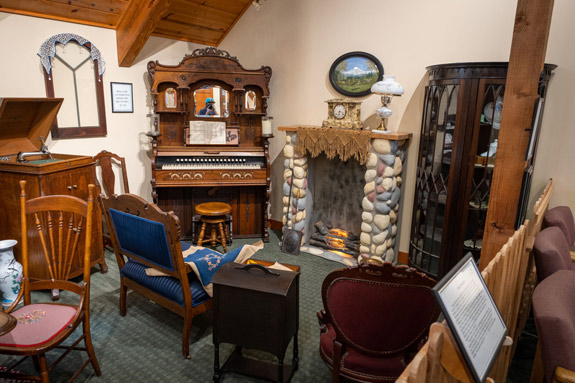
The Sandy Historical Society Museums location was built on the exact site of the famous Barlow Road, which was the last leg of the Oregon Trail that brought thousands of pioneers in covered wagons over the Cascade Mountains to Western Oregon from the mid 1840s until the 1870s.
The museums carefully curated exhibits conjure a history and peoples who endured hardship and travail to help bring civilization to our piece of Oregon Territory. The museum's two floors of exhibit space are devoted to the geography, the pioneers and settlers, and their role in the settling of the West.
The main exhibit hall showcases the role of geography in influencing the immigrants to stay in this area rather than push towards the Columbia River. The exhibit hall includes a diorama, video, logging equipment and an excellent collection of photographs of the logging industry, which was the heart of the Sandy economy.
From the kitchen to the parlor, the barnyard to the local shops, the displays in the top floor gallery (accessible by elevator) are meant to be a look back in time. The exhibits include a good selection of home goods that were at the core of home life - cast iron pots, kitchen implements and more. There is also the museum's Jonsrud Library with relevant history volumes and the family histories of Sandy-area families who have submitted them. The family histories also include photographs and obituaries that volunteers have contributed to the paper history.
The Museum also has meeting facilities for rent, a visitor center, and a gift shop. Where there is a large variety of items from the area: souvenirs, hats, t-shirts and logo items. You are sure to find something to take home!
Hours: Tuesday - Saturday 10am - 4PM. Sunday & Monday Closed
Come visit us soon, as a visit to the Sandy Historical Society Museum is like stepping back in time!
https://www.sandyhistory.com/museum
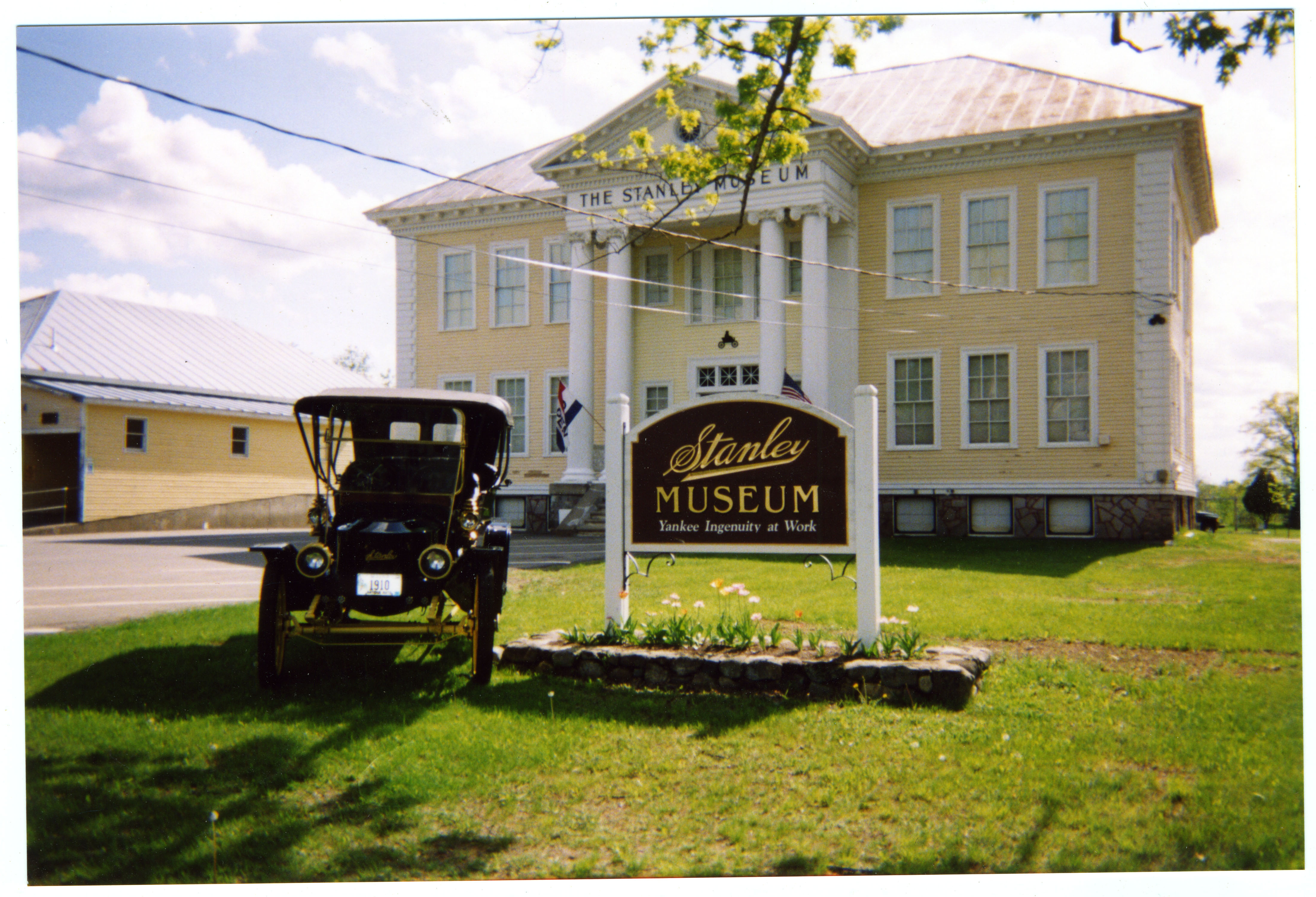
Kingfield, Maine is the home of The Stanley Museum, dedicated to preserving the Stanley family history of art, photography, and steam car automobiles.
The building was originally designed in 1903 by the Kingfield-born identical twin brothers Francis Edgar and Freelan Oscar, and was known as the Stanley School through 1980. Later, when the aging school faced demolition, the townspeople with eventual founder and first director Sue Davis, organized to save the building. Raymond Stanley, son of Francis Edgar, became an ardent member friend and supporter, donating his family collection of photos, artifacts, and papers, as well as his great personal knowledge. More museum backers and steam car owners joined in, membership grew, and the museum's first newsletter was printed in 1983.
The Stanley family achievements include portraitures, the brothers dry-plate formula for photography, and of course the Stanly steam automobile, known for its power and reliability. In 1899, Mr. and Mrs. F.O. Stanley made the first automobile ascent of Mt. Washington. More than 10,000- to 11,000 cars would later be produced under the Stanley name, through 1924. Violins also figure prominently in Stanley history. with the twins lifelong interest in music and wood carving. When the steam car business ended in 1924, surviving twin Freelan joined nephew Carlton Stanley in violin making until his death in 1940; Carlton carried on until 1954. The twins sister Chansonetta, with her own innate artistic abilities, learned photography from her brothers, and her enduring images and hand-colored glass plate slides captured the rural scenes that were beginning to disappear. And Chansonetta's daughter Dorothy, the twins niece, became a highly regarded painter with her own passion for vanishing country life.
The Stanley Museum is committed to preserving the Stanley family achievements and vision. We are located at 40 School St. in Kingfield, ME 04947. 207-265-2729
Our hours: April – May (Tuesday - Friday 11-4) and June – October (Tuesday - Sunday 11-4), and November - December, (Tuesday - Friday 11- 4). https://www.stanleymuseum.org/

Albacore Park, a nonprofit maritime museum and National Historic Landmark Site in Portsmouth, New Hampshire that famously offers walk-through tours of the decommissioned submarine, USS Albacore (AGSS-569), is currently undergoing its very first building expansion—a 1,500 square foot extension to its existing visitor center—since the museum originally opened in 1986.
In support of this expansion, Albacore Park will be hosting a Gala dinner fundraiser on Saturday, October 26th, 2024 from 6:00pm to 9:00pm. The Gala will be held at Atlantic Grill (located at 5 Pioneer Road, Rye, New Hampshire 03870) and will offer hors d'oeuvres, a sit-down dinner, a silent auction featuring a dazzling array of items generously donated by various local businesses, organizations, and artists on the Seacoast, and a very special guest speaker—Dr. Ali (Al) Naqvi, CEO and Professor from the American Institute of Artificial Intelligence.
The USS Albacore’s motto, “Forerunner of the Future” represents the collaboration between science and technology that has always driven America forward. Dr. Al Naqvi is a pioneering leader in Artificial Intelligence whose mission is to responsibly revolutionize AI, while guiding governments, companies, and professionals through AI adoption. At the Albacore Park Gala, he will give an introduction to what AI really is and what it means in the context of the future, reminding us that the USS Albacore is a symbol of technological advancement and a model for how we should approach the development and use of AI.
Tickets for the Albacore Park Gala are on sale now and can be purchased online by visiting AP2024.eventbrite.com. Guests will be asked to make their choice of entree upon ticket purchase. If you’re unable to attend this event but would still like to donate to Albacore Park’s expansion project, please visit them online at ussalbacore.org/donate.

Carillon Historical Park is a 65-acre open-air history museum that serves as the main campus for Dayton History, with over 30 buildings to visit. We share the amazing stories of how Dayton changed the world! The Historical Park is in existence due to the generosity of Colonel Edward Andrew Deeds (1874–1960) and Edith Walton Deeds (1869–1947).
In the 1930s, while traveling in Bruges, Belgium, Edith, an accomplished musician, found inspiration in magnificent carillon music, and she dreamed of sharing this music with the people of Dayton. Edith’s dream became reality through the construction of Deeds Carillon—her most visible legacy to the community she loved.
In 1950, Carillon Historical Park’s Museum complex opened with the purpose of showcasing the region’s industrial innovations, transportation achievements, and Dayton’s contributions to world progress. Since construction first began on Deeds Carillon in 1940, the dreams of Edith and Edward Deeds have evolved into a beautiful 65-acre campus—designed by the Olmsted Brothers (the famed landscape architects responsible for Central Park)—containing dozens of museum buildings and countless artifacts. The Dayton region’s remarkable story continues to inspire visitors from around the world.
Here are the Things to Do and See at the Park!
Heritage Center of Dayton Manufacturing & Entrepreneurship - learn about innovation and invention! By the turn of the century, Dayton had more patents, per capita, than any U.S. city, and one-sixth of the nation’s corporate executives had spent a portion of their career at legendary Dayton company National Cash Register (NCR). Beginning in the mid-1800s, Dayton established itself as a center of manufacturing and entrepreneurship. Early Settlement Area Walk into life as an American settler! Consisting of Newcom Tavern (Dayton’s oldest standing building, ca. 1796), the William Morris House (ca. 1815), the Hetzel Summer Kitchen (1817), Newcom House (ca. 1841), the Watervliet Shaker Building (ca. 1819), and Locust Grove School No. 12 (1896), Carillon Historical Park’s Early Settlement Area recalls the early days of Dayton—a city that would grow and evolve to eventually change the world. The Wright Brothers National Museum, come discover Dayton’s rich past and see the original Wright Flyer III! Dayton is the birth place of the Wright brothers. Come and learn about them! The Print Shop Visit our fully-operational 1930s letterpress print shop! The Carillon Historical Park Print Shop is the nation’s only fully operational 1930s letterpress job shop in a museum. With authentic 1930s printing equipment and furnishings, the Print Shop harkens to a time when Dayton had 77 printing companies, ranging from one-person operations to McCall’s, which produced 4 million magazines daily, including Newsweek, U.S. News & World Report, Reader’s Digest, Redbook, and Popular Science.The James F. Dicke Family Transportation Center Climb aboard one of the old trains in the world! The James F. Dicke Family Transportation Center houses the 1835 B&O #1, John Quincy Adams (the oldest existing American-built locomotive), a breathtaking Barney & Smith parlor railcar, an authentic Conestoga wagon, and many other exceptional transportation-themed artifacts. The Great 1913 Flood Exhibit Learn about the Great 1913 Flood and how it shaped Dayton today! The Great 1913 Flood was Ohio’s worst natural disaster; waters reached 20 feet in low-lying areas and rushed up to 25 miles-per-hour. Gas lines broke, fires roared across town, and the Great Miami River swelled to more than a mile wide on either side. While over 1,400 horses died, the region only accounted for 361 human casualties, largely due to NCR’s massive relief efforts. History on the Hill & Moraine Trails Walk the trails and learn about the Moraine’s geological history! The History on the Hill Interpretive Center tells the story of the land on which Carillon Historical Park sits—its geological history, its settlement by the prehistoric Hopewell people, and its use as a segment of the Miami and Erie Canal. Featuring a number of exhilarating tunnel slides and the Archeology Adventure Zone, History on the Hill has become a popular spot for guests of all ages.
Along with these historical exhibits and musuems the park is also filled with entertainment, special events and festivals year-round. Come and see the rich history of Dayton, OH and how it help shape our Country!
Open: Mon - Sat: 9:30am - 5:00pm, Sun: 12:00pm - 5:00pmhttps://www.daytonhistory.org/
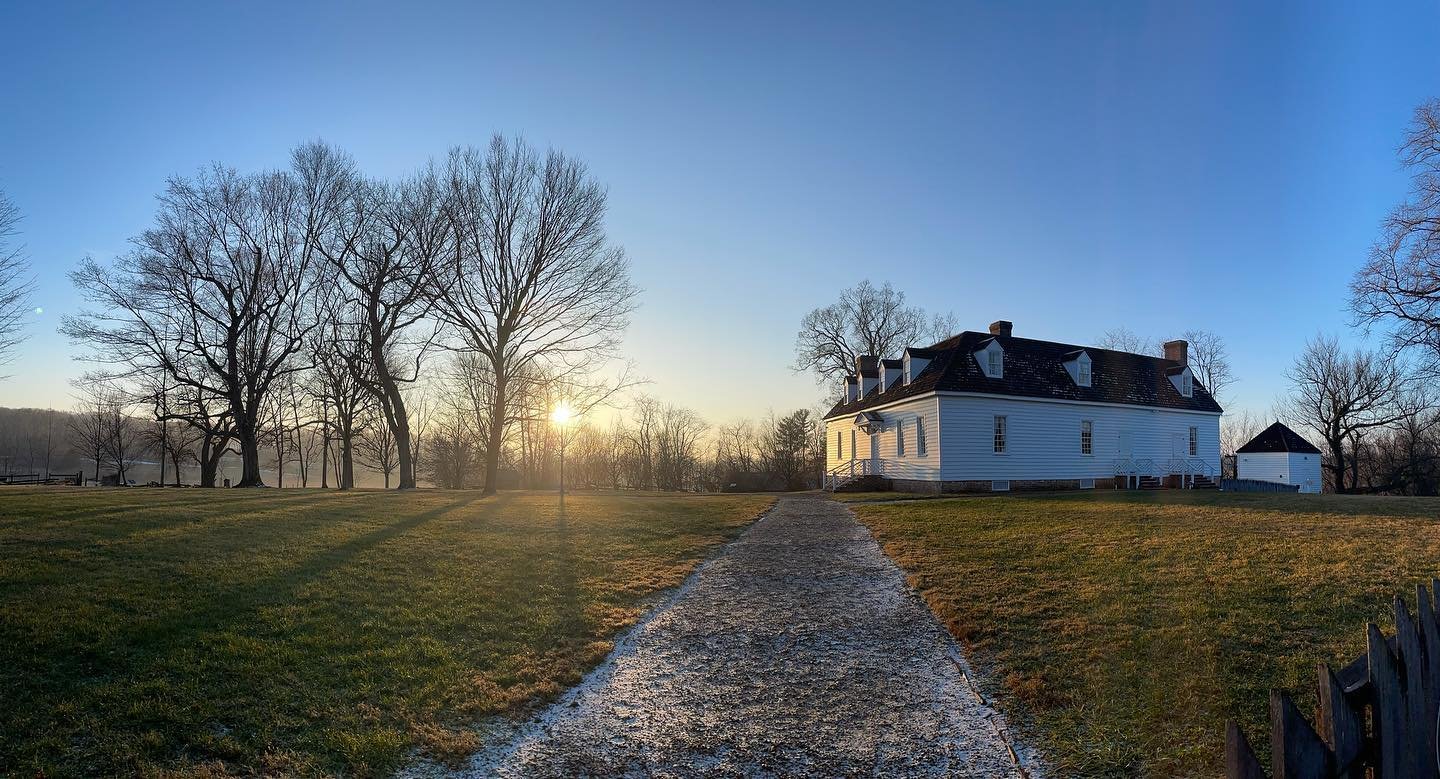
History awaits you in Blacksburg, VA at Historic Smithfield. This historic plantation, was originally part of the Preston family and today, it stands as a preserved historic site and museum, showcasing colonial-era architecture and offering insights into the lifestyle of early settlers.
Historic Smithfield seeks to inspire a new generation of Americans through the stories and values of the Preston Family and all those who lived at Smithfield. These values are liberty, courage, leadership, education, and justice.
Smithfield began operating independently of the APVA (now Virginia Antiquities) in 2018 when the Smithfield-Preston Foundation took full ownership of the property. It partners with Virginia Tech, which holds an historic preservation easement on the manor house, out buildings, and historic landscape.
With the help of the Preservation Virginia and the Virginia Daughters of the American Revolution, the property was restored and opened to the public in 1964. The rooms of the house are furnished with eighteenth and nineteenth century decorative arts furniture, portraits and other items, while the basement level Museum contains a variety of artifacts found on-site, including Native Anerican relics. The landscape includes an eighteenth-century kitchen garden tended by volunteers.
Historic Smithfield uses the complx histories of the regions indigenous peoples, the Preston Family and the enslaved community to inform our present and future! They are open for tours April through the first week in December!
Come visit soon and experience this Anerican rich and complex history in Blacksburg, VA !
https://www.historicsmithfield.org/